Urinary system | Better Health Channel
Most waste products are removed from the body by the urinary system.


Your urinary system is made up of your:
Your urinary system stops waste and toxins from building up in your blood. Your kidneys also:
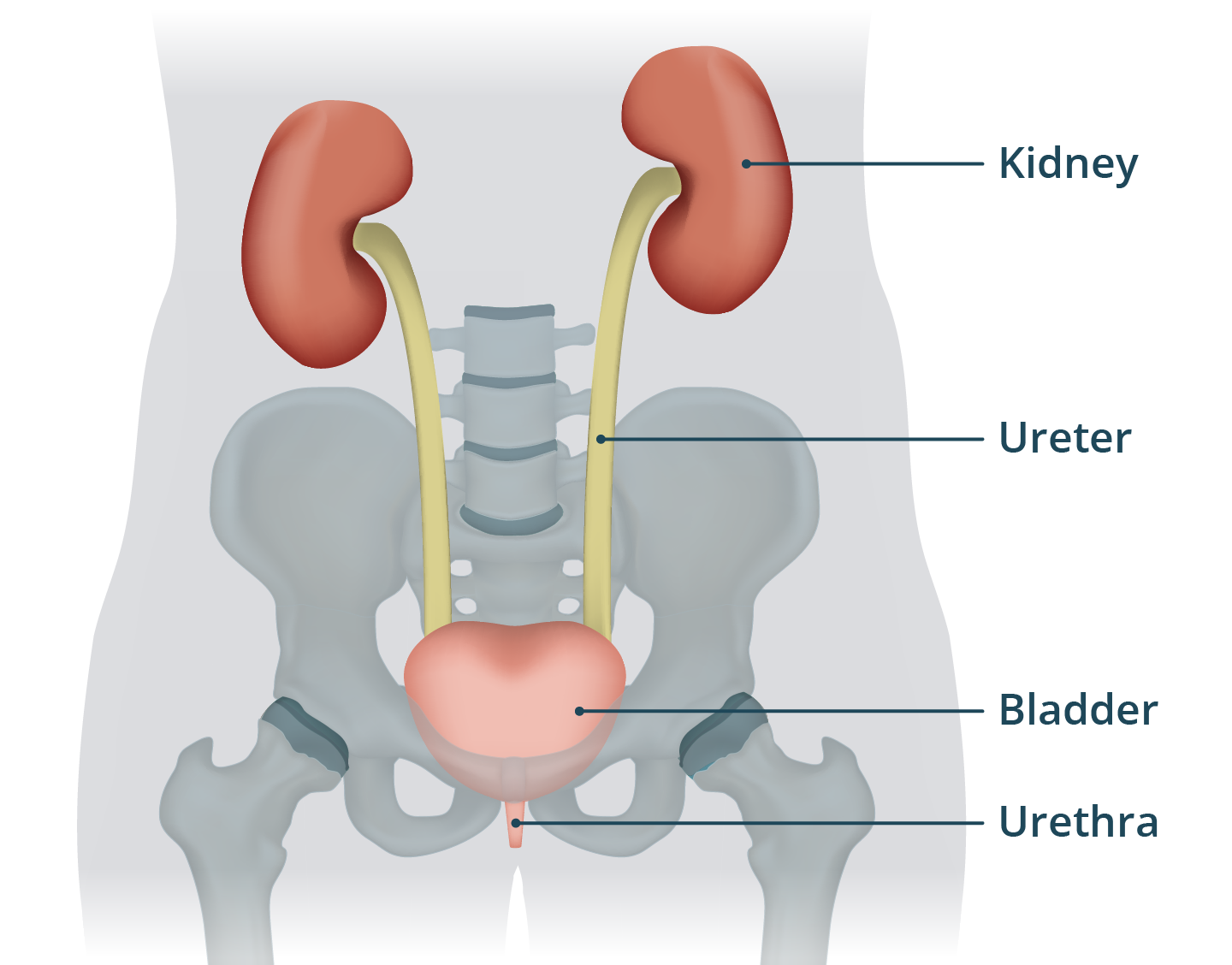
Diagram of the urinary system.
Your urinary tract can become infected. Urinary tract infections (known as UTIs) are common. They are usually caused by bacteria that enter your body through your urethra.
Females are more likely to get UTIs than males.
UTIs can affect different parts of your urinary tract, including your:
UTIs can cause symptoms such as:
See your doctor if you have symptoms of a UTI — you may need treatment with antibiotics.
Chronic kidney disease (CKD) is a serious condition that can affect your urinary system. CKD can be caused by different conditions like diabetes, high blood pressure or polycystic kidney disease. CKD can lead to kidney failure, which can be life threatening. Some signs of CKD include:
See your doctor straight away if you notice red blood in your urine or if your urine has turned pink, red or brown.
You can get kidney stones when chemicals in your urine form crystals that clump together. Kidney stones can cause severe pain.
If you have a kidney stone, you may feel sharp pains in the side of your back, below your ribs. This pain may spread around to your front. You may have other symptoms, including:
It's important to see your doctor if you think you might have a kidney stone.
Urinary retention is being unable to empty your bladder properly. It may come on suddenly (acute urinary retention) or gradually over time.
Acute urinary retention is when you can't pass urine even though you need to and your bladder is full.
See your doctor immediately if your bladder feels full but you can't urinate at all. If your doctor is not available, go to the emergency department at the hospital.
With chronic (ongoing) urinary retention, you can urinate, but you can't completely empty your bladder. This can cause problems, so you should see your doctor for treatment.
Urinary incontinence is when you have trouble controlling your bladder. This can cause leaks and accidental loss of urine.
In males, the urethra passes through the prostate. Because of this, prostate swelling or enlargement can affect the flow of urine.
Problems with urinary flow is one of the most common signs of prostate problems.
To help maintain a healthy urinary system:
Here are some tips to lower your chance of getting an infection:
You should see your doctor if you have symptoms of problems with your urinary system.
Symptoms of bladder problems can include:
Symptoms of kidney disease can include:
Many people with kidney disease don't notice any symptoms until the late stages of the disease. You should have regular kidney checks if you are 60 years or older, have a family history of kidney problems, have had heart problems or are living with obesity.
You should seek care urgently from your doctor, urgent care clinic or local emergency department if you have symptoms of an infection, like:
See your doctor for a kidney health check at least every 1 to 2 years if you're at risk of kidney disease.
You should have a kidney health check each year if you:
You should have a kidney health check every 2 years if you:
A kidney health check involves 3 tests:
Continence Health Australia (Opens in new tab) has information on continence and bladder health. You can call the National Continence Helpline on 1800 33 00 66.
Kidney Health Australia (Opens in new tab) has information about kidney health and conditions. You can call the Kidney Helpline on 1800 454 363.
You can also call the healthdirect helpline on 1800 022 222 (known as NURSE-ON-CALL in Victoria). A registered nurse is available to speak with you 24 hours a day, 7 days a week.
Find out how we develop and review our content.
Last reviewed: March 2026


Worried about your health?
Select a symptom, answer some questions, get advice

