Anal fissure | Better Health Channel
Around half of cases of anal fissures heal by themselves with proper self-care and avoidance of constipation.


An anal fissure is a small tear or split in the skin that lines the anus. Your anus is the hole in your bottom where faeces (poo) leave your body.
Anal fissures are very common. They can happen to people of any age.
If you have pain and discomfort when doing a bowel motion (poo) you might have an anal fissure.
An anal fissure can be very uncomfortable. But it will usually get better if you make some changes to your diet and use some simple treatments.
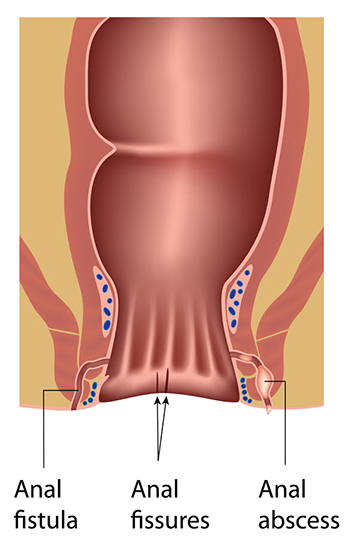
If you have an anal fissure, you will have pain with defecating (pooing). This pain can last for up to 2 hours. The pain is due to:
You may also have some symptoms, such as:
Most anal fissures are caused by trauma (injury) to the area. This can happen:
Other, less common causes of anal fissures are:
You should see your doctor if:
Your doctor will ask about your symptoms and check your anus.
Your doctor may refer you to a colorectal surgeon if the cause of your symptoms is unclear, or your treatment isn't working.
Most anal fissures will heal on their own. Self-care treatments aim to:
Your doctor may recommend eating lots of high-fibre foods and drinking extra water to soften your stools (poos).
Your doctor may also recommend:
These treatments are safe and have few side effects.
If needed, you can also use pain relief medicines.
Self-care treatments usually work in 6 to 8 weeks. Self-care works for more than 8 in 10 people with an anal fissure.
Your doctor may prescribe a medicine for your anal fissure.
Your doctor may prescribe glyceryl nitrate (GTN) cream to help relax your anal sphincter and reduce your pain. GTN cream can cause side effects such as headaches and light-headedness (feeling dizzy). Speak with your doctor or pharmacist if you notice these or other side effects.
If GTN doesn't work, your doctor may prescribe a medicine called a calcium channel blocker.
Botox is another treatment option. It's a chemical that's injected into the muscles around your anus to help them relax. It's recommended for people who have a high chance of developing faecal incontinence from surgery.
Botox usually lasts for 2 to 3 months. This allows the fissure to heal.
Your doctor may recommend surgery if other treatments have not worked.
Anal fissure surgery is known as a lateral internal sphincterotomy. A small cut is made in your sphincter muscle, which to help it relax. You can have this procedure done as day surgery.
Anal fissures can sometimes reoccur (come back).
About 4 out of 10 cases of anal fissures can become chronic (long term) fissures. If the split doesn't heal well, it can cause a small ulcer to form.
You can prevent anal fissures by eating a diet that's high in fibre. This can also help stop an anal fissure from happening again.
You can also:
The Queensland Government has resources about healthy toilet habits (Opens in new tab) and increasing your fibre intake (Opens in new tab).
The Royal Women's Hospital has a useful factsheet about preventing constipation (Opens in new tab).
You can also call the healthdirect helpline on 1800 022 222 (known as NURSE-ON-CALL in Victoria). A registered nurse is available to speak with you 24 hours a day, 7 days a week.
Find out how we develop and review our content.
Last reviewed: April 2026


Worried about your health?
Select a symptom, answer some questions, get advice

