Diarrhoea: self-care - myDr.com.au
Diarrhoea is when your bowel movements become watery, foul-smelling and the need to go to the toilet is urgent and frequent. Find out what products are available for diarrhoea.


Diarrhoea is when you have 3 or more loose or liquid stools (poos) in one day, or more frequently than normal. If you have diarrhoea, you will notice an increase in the volume, wateriness or frequency of your bowel movements.
Diarrhoea episodes are often caused by a stomach bug (gastroenteritis) and clear up on their own in a few days. However, there are many other causes of diarrhoea.
Most diarrhoea is mild, but it can also be severe enough to need to go to hospital.
This article covers diarrhoea in adults and children over 12 years. See diarrhoea in children for information about diarrhoea in young children.
As well as the loose and watery stools of diarrhoea, you may sometimes have other symptoms, including:
You may feel an urgent need to go to the toilet.
Dehydration can develop when you have diarrhoea, especially in children and older adults.
Diarrhoea happens when not enough water is removed from your stool, or too much fluid is secreted into the stool, making it loose.
There are many different causes of diarrhoea. It can be caused by a short-term illness that clears up in a few days. If diarrhoea continues for weeks, it is likely to be a symptom of an ongoing problem or chronic condition.
Short-term diarrhoea is often due to infections, such as:
Other causes of short-term diarrhoea can include:
Diarrhoea can be caused by some long-term conditions, such as:
People who are immunosuppressed or have weakened immune systems are more likely to develop ongoing diarrhoea after a bout of gastroenteritis. This includes people who have:
Medical treatments that may cause diarrhoea as a side effect include:
Your doctor will ask about your symptoms and take a medical history. They will also examine you.
If your diarrhoea goes away after a few days you may not find out the cause.
Sometimes, tests will be needed to diagnose the cause of your diarrhoea. These can include:
If you have ongoing diarrhoea, your doctor may refer you to a specialist for tests and to work out the underlying cause.
An isolated episode of diarrhoea will often clear up without any treatment and you won't need to see a doctor.
Seek medical advice if you have any of the following:
See you doctor immediately or go to the nearest hospital emergency department if you have:
Diarrhoea can lead to dehydration and an electrolyte (salt) imbalance, making it dangerous — especially in very young or older people, who can get worse quickly.
Simple diarrhoea usually clears up by itself in healthy people. In many cases you will be able to manage your symptoms at home.
If your diarrhoea doesn't clear up on its own there are medicines and other treatments available.
You should try to do the following:
You can buy oral rehydration solutions over the counter from your pharmacist or at the supermarket.
For older people and children, oral rehydration solutions are better than plain water. They contain the right concentration of salts to replace both fluids and electrolytes that your body needs.
Sports rehydration drinks are not recommended.
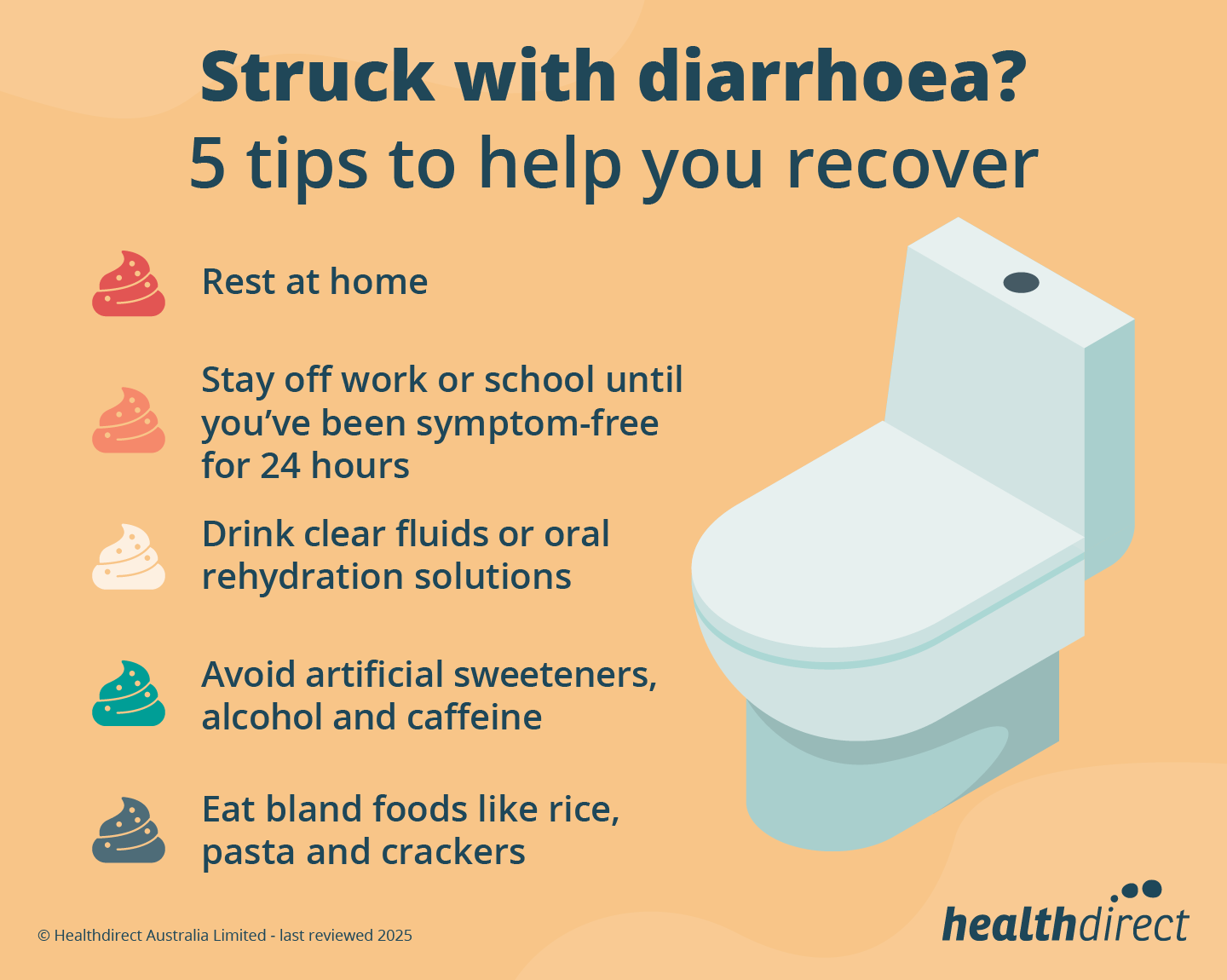
5 tips to help you recover from diarrhoea.
Check with your pharmacist or doctor if you are thinking of taking over-the-counter anti-diarrhoeal medicines. These are not suitable for use in all cases of diarrhoea. Do not take them if you have a fever or have blood in your stool.
Remember that diarrhoea can be your body's way of getting rid of an infection. Anti-diarrhoeal medicines should not be taken long term because they slow your gut and may prolong your illness.
Anti-diarrhoeal medicines should not be used to treat diarrhoea in children.
Other treatments for diarrhoea will depend on the cause. They may include:
Gastroenteritis is the most common cause of diarrhoea. It is highly infectious, and mostly spread by contact with another person who has the illness. Gastroenteritis can also come from contaminated food.
To help to stop the spread of gastroenteritis:
If you are planning overseas travel, see your doctor about recommended vaccines.
Diarrhoea may cause dehydration because more fluids are lost than normal. It can also lead to an imbalance in electrolytes (salts and minerals your body needs to function properly.)
Ongoing diarrhoea can make it difficult for you to absorb nutrients from food and can lead to malnutrition.
Some people may develop temporary lactose intolerance after an episode of diarrhoea or gastroenteritis. See your doctor if the symptoms continue for more than a couple of weeks.
If you need advice on what to do if you have diarrhoea, call healthdirect on 1800 022 222 (known as NURSE-ON-CALL in Victoria) to speak with a registered nurse, 24 hours, 7 days a week.
Visit pregnancy birth and baby to learn about diarrhoea in babies and children. (Opens in new tab)
For more information about chronic conditions associated with diarrhoea try these resources:
Find out how we develop and review our content.
Last reviewed: February 2024


Worried about your health?
Select a symptom, answer some questions, get advice
