ACD A-Z of Skin - Squamous Cell Carcinoma
Last updated: April 2024 What is squamous cell carcinoma? Squamous cell carcinoma (SCC) is one of the most common forms of skin cancer, with only basal cell carcinoma (BCC) occurring ...


Squamous cell carcinoma (SCC) is a type of skin cancer that starts in the top layer of your skin. It is the second most common type of skin cancer. The most common type is basal cell carcinoma (BCC).
SCC can develop anywhere on your body. It usually grows in areas that get a lot of sun exposure, such as your:
If not treated, SCC can grow quickly. It can spread and even cause death. Every year, people in Australia die from SCCs.
SCC can be divided into different types based on how much it has grown or spread.
If SCC is not treated early, it may grow and spread to other parts of your body.
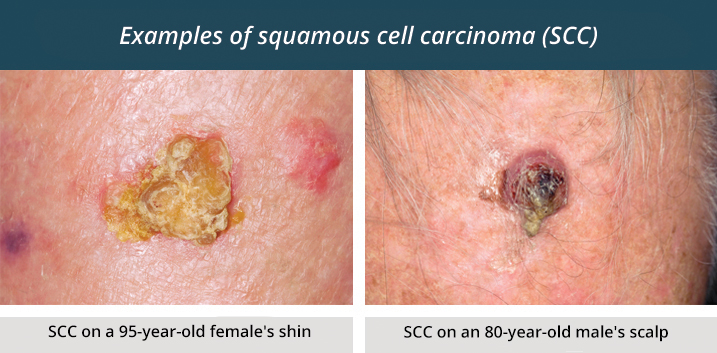
The first sign of SCC is usually a thick, scaly area on your skin that does not heal. It may bleed or form a sore. It tends to grow slowly.
If you have SCC in your genital area, it may look like a small sore that doesn't go away.
As your SCC grows into the deeper layers of your skin, it may grow faster and become painful.
SCC happens when squamous cells in the top layer of your skin grow out of control. This is often caused by too much sun exposure, which damages the skin cells.
You may have a higher risk of developing SCC if you:
See your doctor if you:
It's important to check your skin regularly, especially if you are at high risk of skin cancer. Look for changes in shape, colour and size of any spots or moles on your skin.
You can use the ABCDE guide to check for suspicious spots:
There are no specific guidelines for skin cancer screening. Based on your personal risk, your doctor may discuss with you how often you should be checked.
Read the article 'should I be checked for skin cancer'?
If your doctor thinks you may have SCC, they may:
You doctor may refer you to a dermatologist (skin specialist) for further testing or treatment.
Your doctor can treat SCC in several ways, such as:
It is usually possible to completely remove your SCC. The best treatment for you will depend on the size and location of your SCC.
If your SCC has spread, your doctor may suggest treatments, such as:
If you've had SCC, you are at a higher risk of developing another skin cancer. It's very important to protect your skin from the sun.
If your SCC is not treated early, it may grow and spread to other organs in your body.
You can prevent SCC by protecting your skin from ultraviolet (UV) radiation. This means protecting your skin from the sun.
Here are some ways to help prevent SCC:
If you are at high risk of skin cancer, your doctor may prescribe specific vitamins to help reduce your risk.
You can also call the healthdirect helpline on 1800 022 222 (known as NURSE-ON-CALL in Victoria). A registered nurse is available 24 hours a day, 7 days a week.
Find out how we develop and review our content.
Last reviewed: December 2024


Worried about your health?
Select a symptom, answer some questions, get advice


